




Blog / Monroe, MI Chevrolet Dealer

Exploring the 2024 Chevy Silverado EV: The Future of Trucks

Exploring the 2024 Chevy Silverado EV: The Future of Trucks

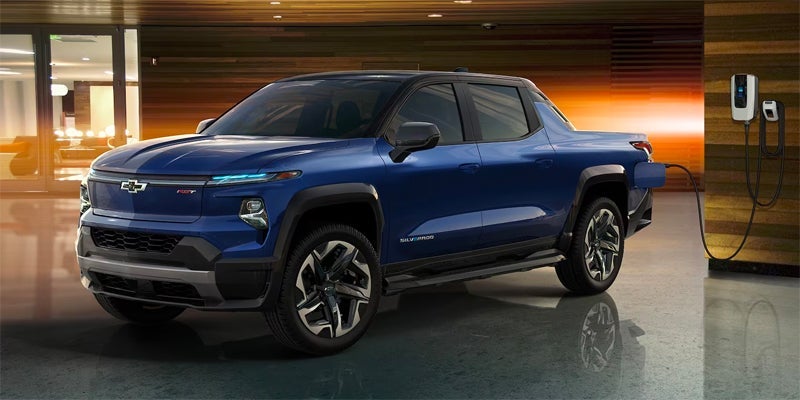
Chevy knows how to build great trucks. The 1948 Thriftmaster, the 1955 Cameo Carrier, the El Camino, the Silverado: the list is endless, really. These trucks were/are tough, stylish, sometimes outrageous, but always brilliant in some form or another. Now, the 2024 Chevy Silverado EV carries this legacy forward. It's every bit the Silverado you know and love, but now it runs on battery power.

Exploring the 2024 Chevy Silverado EV: The Future of Trucks

Range and Towing Capacity

Of course, you need a truck that can chew those highway miles without being bogged down, and that's what the Silverado delivers. Chevy estimates that this car has a range of 440 miles. That's 30 more miles than the longest-range Rivian, about 100 more than the Cybertruck, and a whopping 120 miles longer than the F-150 Lightning. Impressed?

But it is not just a range champ; the Silverado EV is built for hard work. It can tow up to 10,000 pounds, putting it in line with some of the best in the business, EV and gas-powered models included.

Charging

You have three options when it comes to charging your Silverado EV. First up, there's the good old home charging setup. Just plug it into a standard outlet, and when you wake up, it's ready to go. Next, if you're looking for more speed, you can opt for the available 240-volt level 2 charger. This will give your truck a much quicker top-up, meaning you'll spend less time waiting and more time out on the road.

Finally, if you're really in a hurry, there are DC fast chargers available. According to GM, your truck can add about 100 miles of range after just 10 minutes of fast charging. You can grab some coffee, stretch your legs, and then zoom off with enough juice to complete your journey.

All the Horsepower You Need

When empty, the Silverado EV can go from 0 to 60 in under 4.5 seconds. You get all this power thanks to the Wide Open Watts mode, which delivers 754 horsepower and 785 pound-feet of torque.

In normal driving mode, however, you're likely to see less power, as it is designed to be more efficient for everyday use. So, while it can unleash serious speed when you want it to, it's also smart enough to tone it down when you're just cruising around.

Storage

The Silverado EV comes with a 5-foot, 11-inch bed, but it's not a one-trick pony. Fold down the midgate, and you're looking at over 9 feet of pure space waiting for those odd-shaped or large items. Need to push the boundaries even further? Drop the tailgate for 10 feet, 11 inches of hauling capability.

Want to experience the future of truck driving? The 2024 Silverado is ready to show you. Contact Allen Chevrolet-MI in Monroe, MI, for an exclusive test drive.
Posted in:

Related Posts

Chevrolet Equinox

Chevy Equinox vs. Blazer: Two SUVs, Two Different Ideas

The Equinox and Blazer sit close enough in Chevrolet’s SUV range to invite comparison, but they don’t feel like variations of the same vehicle. The 2027 Equinox is shorter, lighter on its feet, and built around straightforward everyday use. The 2026 Blazer is longer, more powerful, and carries a distinctly sportier character. For drivers around Monroe, Michigan, the Chevy Equinox versus Blazer decision is best approached by looking at what those differences mean in normal use. The Equinox Keeps the Package Manageable At 183.2 inches long, the 2027 Equinox is the shorter of the two. That matters in town, where a few inches can make parking and maneuvering considerably easier. Its 1.5L Turbo engine produces 175 hp and 203 lbs. ft. of torque. Properly equipped, towing capacity reaches 1,500 lbs. These aren’t numbers intended to turn the Equinox into a performance SUV. They suit its role as a practical 5-passenger vehicle for commuting, errands, family duties, and longer trips. The interior follows much the same philosophy. An 11.3-inch diagonal infotainment touchscreen provides the focal point, with Apple CarPlay and Android Auto compatibility and OnStar connectivity. Wireless phone charging is available. It’s clean, straightforward, and doesn’t try to make the controls more complicated than the job requires. The Blazer Brings More Engine with the Extra Leangth The 2026 Blazer measures 191.8 inches long, giving it a noticeably larger footprint than the Equinox. There’s also considerably more power available. The standard 2.0L Turbocharged 4-cylinder produces 228 hp and 258 lbs. ft. of torque. An available 3.6L V6 raises output to 308 hp and 270 lbs. ft. of torque. That alone changes the character of the vehicle. The Blazer isn’t simply an Equinox with additional sheet metal. Its powertrain choices and sportier design give it a stronger performance emphasis. Inside, the Blazer provides seating for 5 passengers and up to 64.2 cu. ft. of maximum cargo volume. A 10.2-inch diagonal HD touchscreen handles infotainment duties. Size Matters, but Not Quite How You’d Expect The difference between these SUVs is 8.6 inches in overall length. That’s enough to notice, particularly if most of your driving involves crowded parking lots or tighter residential streets. The Blazer’s larger dimensions provide more physical presence and substantial cargo capacity. The Equinox counters by being easier to place on the road and more manageable for drivers who simply don’t need a vehicle approaching 192 inches long. Neither approach is inherently better. Buying extra vehicle only makes sense if you have a use for it. Both Take Driver Assistance Seriously The 2027 Equinox includes more than 15 standard safety and driver-assistance features, giving buyers a substantial amount of technology without requiring them to climb through the trim range. The 2026 Blazer comes standard with the Driver Confidence Package and Chevy Safety Assist. Chevy Safety Assist bundles 6 safety and driver-assistance technologies. Equipment differs between the two, so buyers particularly interested in a specific assistance feature should compare the exact trims they’re considering rather than assuming both SUVs package their technology identically. The Engines May Settle the Argument For many buyers, the clearest dividing line isn’t cabin technology or exterior dimensions. It’s power. The Equinox has one 175-hp Turbocharged engine and focuses on everyday utility. The Blazer starts at 228 hp and offers a 308-hp V6 for drivers who want substantially more output. That makes the decision rather neat. Choose the Equinox if you prefer a shorter, straightforward SUV that covers everyday transportation without excess size or power. Look toward the Blazer if you want a larger vehicle, more cargo capacity, and stronger engine choices. Compare Them from the Driver's Seat A specifications sheet makes the Equinox and Blazer look relatively close. Drive them, and their different priorities should become much clearer. Visit Allen Chevrolet in Monroe to compare available Equinox and Blazer models, review trims and features, and see which size works better for you. Once you’ve narrowed down the choice, schedule a test drive online and spend some time behind the wheel before deciding.

Chevrolet Protection Plan

What You Need to Know About the Chevrolet Protection Plan

Buying a new or used Chevrolet is a big decision, and you want to make sure that your vehicle (and your wallet) is protected from any unforeseen issues down the road. Sure, you know that Chevys are high-quality and long-lasting vehicles, but things can happen, and you want to make sure you’re covered. A Chevrolet Protection Plan gives you a structured way to manage repair costs after your factory warranty expires, so unexpected breakdowns do not catch you off guard. If you are researching coverage options in Monroe, MI, here's a look at how these plans work and what they typically cover. What Is a Chevrolet Protection Plan? A Chevrolet Protection Plan is an extended coverage program backed by General Motors that helps pay for eligible repairs beyond the terms of your original factory warranty. Unlike third-party policies, a Chevrolet Protection Plan is specifically designed for Chevy vehicles and is honored at Chevrolet dealerships across the country. This is important because your vehicle is serviced by trained technicians using genuine GM parts, which helps maintain the quality and reliability you expect. Covered-Component Categories One of the things to understand about a Chevrolet Protection Plan is how covered components are organized. Coverage is generally structured in tiers, ranging from powertrain-focused plans to more comprehensive options that protect a broader range of systems. Powertrain coverage typically includes the engine, transmission, and drive axle components - the mechanical systems most critical to keeping your vehicle running. Higher-tier plans expand that coverage to include items such as the steering system, suspension, electrical components, air conditioning, and more. Understanding which tier aligns with your needs and driving habits is a key step in choosing the right plan. Chevy Vehicle Service Contract Options When people refer to a Chevy vehicle service contract, they are often describing one of the tiered Chevrolet Protection Plan options available for purchase. These contracts can sometimes be added at the time of vehicle purchase or later, depending on the plan and your vehicle's eligibility. Terms vary based on factors such as mileage, vehicle age, and the level of coverage selected. A vehicle service contract purchased through Chevrolet also comes with added benefits that can make ownership more convenient. Roadside assistance, rental car reimbursement, and trip interruption coverage are commonly included features that provide value during an unexpected repair situation. Why Consider a Protection Plan? For drivers in Monroe, Michigan, seasonal weather conditions can put added stress on your vehicle's mechanical and electrical systems. Cold winters and year-round road use create circumstances where coverage for heating systems, suspension components, and other wear-prone parts becomes relevant. A Chevrolet Protection Plan can help offset those unpredictable costs. Having coverage also simplifies the repair process. When something goes wrong, you bring your Chevrolet to an authorized dealership rather than navigating a claims process with an unfamiliar third party. How to Choose the Right Plan Choosing the right Chevrolet Protection Plan starts by thinking about how long you plan to keep your vehicle and how many miles you typically drive per year. If you plan to keep your Chevy for the long haul, a more comprehensive plan that covers electrical and tech components alongside powertrain systems may offer the best value. It also helps to review what your current factory warranty still covers. That way, you can choose a plan that picks up where your existing coverage leaves off rather than paying for duplicate protection. Visit Allen Chevrolet to Explore Your Options So, if you’re purchasing a new Chevy or looking to add coverage to a vehicle you already own, it’s well worth it to consider a Chevrolet Protection Plan. Understanding the covered-component categories and available Chevy vehicle service contract tiers helps you make a better choice. Stop by Allen Chevrolet or visit us online at allenchevy.com to learn which protection options are available for your vehicle.

Trax

Should I Buy a Demo Car? Here's What You Need to Know

You may have come across the term "demo car" when researching your next vehicle, and asked yourself if you should buy one. It seems too good to be true—basically a new car at a discount. Here’s what a demo vehicle is and how it compares to a brand-new one sitting untouched on the lot in Monroe, Michigan. What Is a Demo Vehicle? A demo vehicle is a car or truck that a dealership has used for demonstration purposes before offering it for sale. This might include test drives, staff use, or promotional events. Chevrolet demo vehicles are typically current-model-year units that have accumulated some miles but have never been titled to a private owner. That means they can still qualify for new vehicle financing and warranties in many cases. How Does a Demo Car Differ From a New Car? The most obvious difference is mileage. A new car comes with zero miles, while a demo may have anywhere from a few hundred to several thousand miles already on it. Because of that, demo vehicles are usually priced below the full sticker price of a comparable new model. Beyond the mileage, a demo unit has likely gone through more hands and may show minor signs of wear from regular use. That said, reputable dealerships keep these vehicles well-maintained and in good condition—they are, after all, for demonstration. What Are the Benefits of Buying a Demo Car? One of the biggest draws of Chevrolet demo vehicles is the potential for savings. You may be able to get a well-equipped trim level at a lower price point than you would for the same vehicle brand-new. Demo cars often still come with the remainder of the factory warranty, and may even include additional features and packages already installed. For drivers in Monroe, Michigan, who want strong value without stepping into the used car market, a demo can be a practical middle ground. What Should You Watch Out For? Before committing, it’s smart to ask a few key questions. Find out exactly how many miles are on the vehicle, how it was used, and whether any of the factory warranty has already been used. Any reputable dealer will expect these questions and have the answers prepared. You should also review the vehicle history and ask about any service that has been performed. Understanding what you’re getting upfront helps you feel confident in the decision and ensures there are no surprises after you drive off the lot. Is a Demo Car Right for You? If you’re looking to get more features for your dollar and don’t mind a modest amount of prior use, a demo could be a great fit. For buyers who want the complete new-car experience with zero miles and full warranty coverage from day one, a brand-new model may be the better path. The right choice comes down to your priorities and budget. Visit Allen Chevrolet in Monroe, MI So, what’s the bottom line on buying a demo car? Should you do it? For the right buyer, absolutely. Demo vehicles can offer real value, solid coverage, and access to well-equipped models at a more accessible price. Take the time to ask the right questions, review the details, and work with a trusted local dealership to make sure you drive home with confidence. Whether you are exploring new inventory or curious about available demo options, the team at Allen Chevrolet is here to help you find the right fit. Stop by Allen Chevrolet - MI to browse current vehicles and get answers to any questions you have about the buying process.